Your Hair Clients Aren't Really Yours Until Your Book Is — A Stylist's Guide to Owning Your Client List

Vera spent four years building a chair at a busy downtown salon. Color, cuts, the works — she had around 90 regulars who genuinely loved her, the kind who’d wait three weeks for her and turn down anyone else.
Then she took a chair at a salon ten minutes from her apartment: better rent, better hours, same city. She assumed her people would simply follow. Why wouldn’t they? Three months later, fewer than half had found her.
Not because they were unhappy. Because they couldn’t reach her. Every booking they’d ever made went through the old salon’s front desk and the old salon’s Instagram. Vera had cut their hair for four years and never once had their phone numbers. They didn’t have hers either. When she walked out, she walked out with her shears, her kit, and almost nothing else.
Her clients were never actually hers. The salon’s booking system owned the relationship — and the day she left, the salon kept it.
Whose clients are they, really?
It’s the uncomfortable question almost no chair-renter asks until it’s too late. You bring the skill. You bring the personality people come back for. Often you brought the client in the first place. But ask yourself one thing: if you left tomorrow, how would you reach them?
If the only answer runs through something you don’t control, the relationship isn’t fully yours. And there are usually three culprits:
- The salon’s system or front desk — clients book through the salon, pay the salon, and their contact details live in the salon’s software. It stays when you leave
- Instagram DMs — the account can be hacked, locked, or shut down overnight, and even on a good day it’s Meta’s platform, not your records. One ban and your “client list” is gone
- A paper book at your station — convenient until the day it’s left in a drawer at an address you no longer work at
A client who can only reach you through a channel you don’t own isn’t really your client. She belongs to the channel — and you’re renting her along with the chair.
You’re already a business owner — start keeping your own records
Here’s the reframe that changes how you treat your list. If you pay booth rent, buy your own color, set your own prices, and bring in your own clients, you are not “just renting a chair.” You are running a small business that happens to share an address with five others.
And every business has one asset more valuable than its tools: the list of people who will pay it again. Your shears can be replaced in an afternoon. A book of 90 regulars who trust your hands took you years.
Put a number on it. Say those 90 regulars see you an average of seven times a year at $90 a visit:
Ninety regulars × 7 visits × $90 = about $56,700 a year that exists because those people specifically come back to you. That’s not the salon’s revenue and it’s not luck — it’s the value of a book most stylists have never written down anywhere they actually control.
The salon owns the walls. You own the relationships — but only if you keep your own copy of them.
What a client book worth owning actually holds
This isn’t about elaborate software. It’s about being able to walk out the door with everything that matters still in your pocket. A book worth owning holds, for every client:
- A direct line to them — name and phone number you can reach without asking anyone’s permission
- Their color formula and history — so you can recreate four years of work at a new chair, not start the consultation over
- What they pay and how often — so you know, in real numbers, what your own book is worth
- A note or two that’s personal — the things that make them feel known and keep them loyal
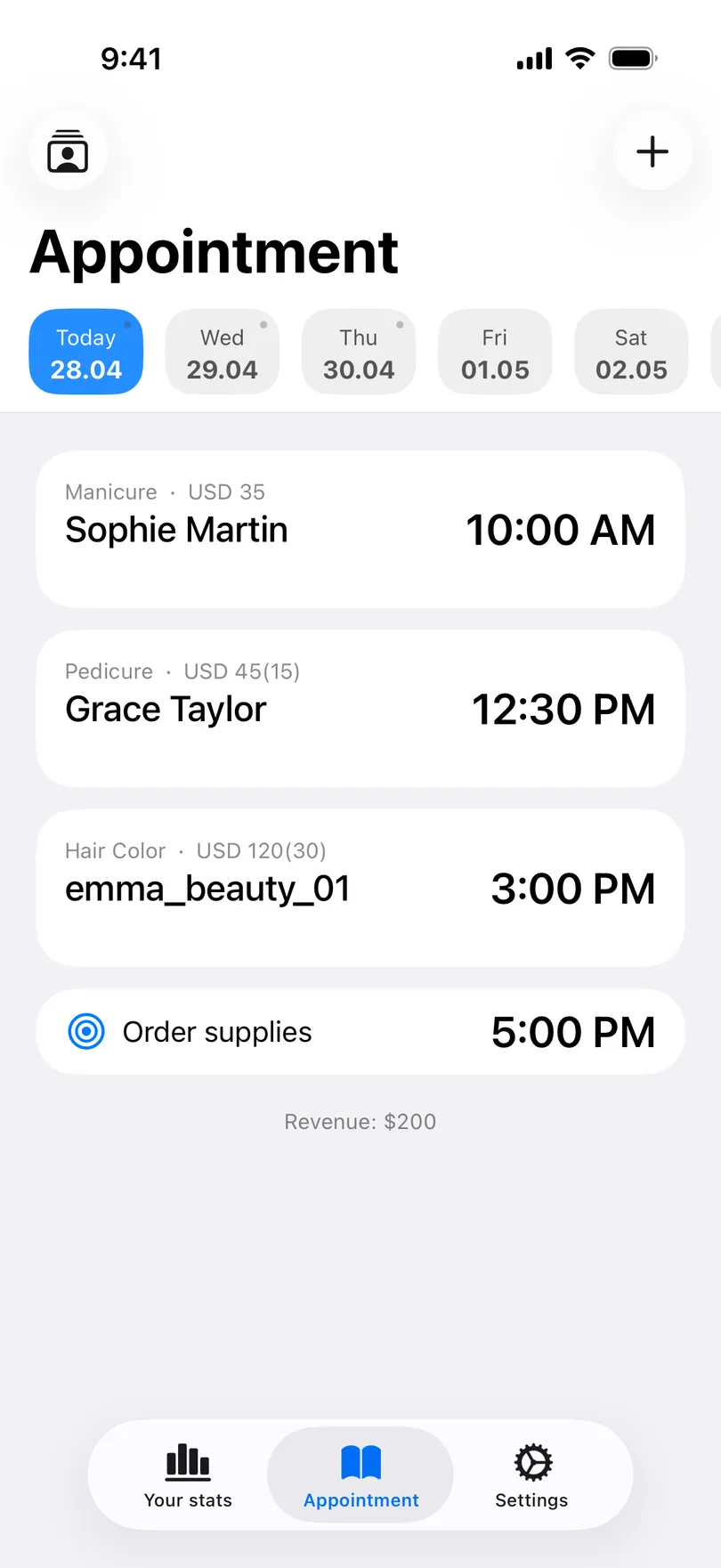
Notice what’s not on that list: anything that requires the salon’s login, anyone’s front desk, or a platform that can change its terms on you. The test of a real asset is simple — can someone else take it away from you? If yes, it isn’t fully yours yet.
The three places your book should never live
Most stylists already have a client list. The problem is where it lives. Three of the most common homes are quietly the most fragile:
- The salon’s CRM or front desk. It works beautifully right up until the day you change chairs — then it stays behind, with every number in it
- Instagram DMs. A hacked account, a wrongful ban, or one algorithm change and years of conversations vanish. You’re building your business on rented land owned by a company that has never met you
- A subscription booking platform. Stop paying and you can be locked out of your own clients. Some even charge you commission on the regulars you brought in — you pay rent on relationships you built
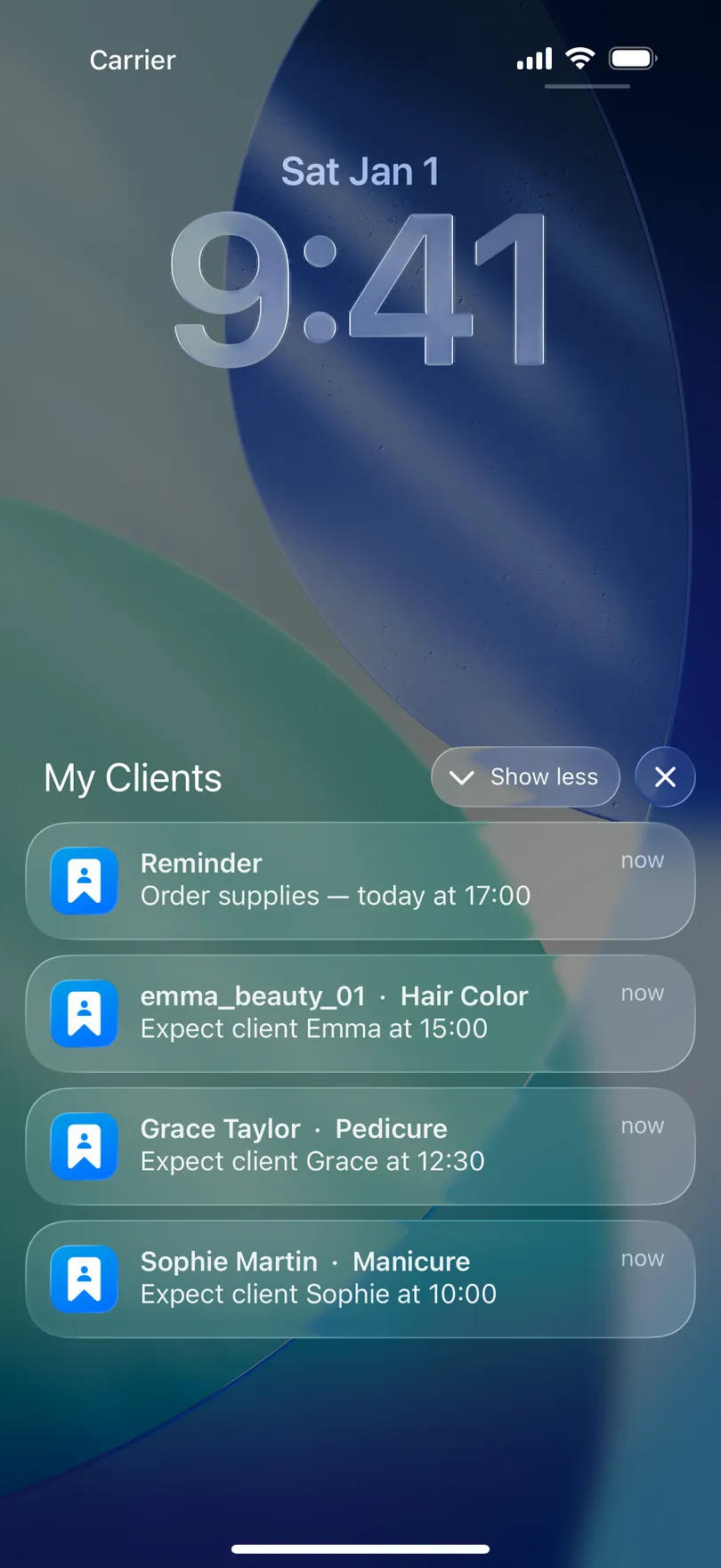
The alternative is unglamorous and bulletproof: a book that lives on your phone. Nobody can keep it behind a desk, suspend it, or hold it for ransom. It moves when you move.
The safest place for the most valuable thing you own is the one device that never leaves your hand — not a server, not a feed, not someone else’s filing cabinet.
Moving day, two ways
The difference between owning your book and renting it shows up on exactly one day: the day you leave.
Vera’s first move — no book of her own:
- Walked out with skill and a kit, but no contact details
- Posted “I’ve moved!” to an Instagram following the salon partly controlled
- Spent three months hoping people would track her down
- Lost roughly 40 of 90 regulars — and re-guessed formulas for the ones who did find her
After that, she started keeping her own records on her phone: every client, every number, every formula, logged at the chair.
Vera’s second move — with her own book:
- Texted all 90 regulars herself, a week before her last day
- Walked into the new chair with formulas and histories already in hand
- Rebooked most of them into her first two weeks before she’d even started
- Lost a handful instead of half
The numbers
- First move: ~40 regulars lost, a third of her income gone for a quarter
- Second move: fewer than 10 lost, and most rebooked before day one
- The only thing that changed was who held the list — and it was finally her
“The first time I moved, I learned my clients weren’t mine — the salon’s computer was. The second time, I just texted them myself. Same hands, same people. The difference was a list on my own phone.” — Vera
Your list, on your phone, and nowhere else
This is exactly the problem My Clients is built around. It’s a client book that lives on your device — not in the cloud, not behind a login, not on a platform that can change the deal:
- Everything stored locally on your phone — your list is yours, full stop
- No account, no mandatory subscription — nothing to lock you out, nothing to cancel, no commission on your own regulars
- Works offline — the salon Wi-Fi, the front desk, the platform’s servers are all irrelevant
- It comes with you — change chairs, change salons, go mobile, and your whole business is already in your pocket
Because the entire point of an asset is that no one else can take it.
The bottom line
You don’t have to leave your salon to start owning your business. You just have to stop letting someone else hold the one thing that makes it a business:
- Keep your own copy of every client’s name and number — not the salon’s, not Instagram’s
- Log the formula and history at the chair, so your work is portable
- Know what your book is worth in real numbers, because it’s your most valuable asset
- Store it somewhere only you control — your phone, offline, no account
Your hands built the loyalty. Make sure the list is yours too. Try My Clients — free, no sign-up, works offline, and your client book never leaves your phone.
You might also find useful
Start organizing your clients today