How a Solo Dog Groomer Can Keep Every Dog on Cycle, Cut No-Shows, and See Her Real Income

Dana runs a one-woman grooming studio behind her house. About 70 dogs are on rotation — full grooms, bath-and-tidies, the standalone nail trims. Her bookings live in a mix of text messages and a wall calendar, the cut every owner wants lives in her head, and which dog bites during nail trims lives in the scar on her thumb.
This morning’s 9 a.m. was a matted spaniel. The owner had pushed the groom from six weeks to fourteen, the coat had felted to the skin, and a $75 tidy turned into a two-hour shave-down she had to charge $40 extra for — with an apologetic owner and an unhappy dog. And while she clipped, she realized something worse: Bella, the doodle who came every six weeks like clockwork, hadn’t been in for four months. Dana never noticed her go.
Dana’s hands aren’t the problem — owners drive across town for her cuts. What she’s missing is a system built around the one thing that makes grooming different from a haircut: the coat keeps growing on a clock, and if you miss the window, it doesn’t wait.
The Grooming Business Runs on a Coat Clock
Hair grows back whether the dog comes in or not. That’s why your income runs on a cycle most service businesses don’t have — and why a missed cycle costs more than a missed booking:
- The groom window is real — most coats need a full groom every 4–8 weeks; a doodle or poodle closer to 4–6
- Past the window, the coat mats — and a matted coat can’t be brushed out. It has to be shaved down: more time, more money, sometimes a frightened dog
- A slipped cycle isn’t neutral — the owner pays a de-matting fee (and feels it), or quietly decides grooming is “too expensive” and stretches it even further
- Cycle slip is invisible — nobody texts “I’m drifting.” They just book at 6 weeks, then 10, then 14, then never
A dog on a 6-week cycle gets groomed about 8 times a year. The same dog stretched to 12 weeks comes 4 times. At $75 a groom, that one quiet slip costs $300 a year — per dog. Five slipping regulars is $1,500 you never see leave.
This is the core of grooming client management: it isn’t about storing phone numbers. It’s about protecting the cycle before the coat mats.
Where the Money Quietly Leaks
Run the book on texts, memory, and a wall calendar, and the same five leaks show up:
- Regulars drift off cycle unnoticed — like Bella. By the time you wonder where she went, she’s matted on someone else’s table
- No-shows hit harder than in most niches — a full groom is a 2-hour slot. One forgotten appointment doesn’t cost you a booking; it costs you the two other dogs you turned away to hold it
- Cut specs live in your head — “teddy-bear face, #4 body, tail left full.” When memory blurs, the dog goes home looking wrong, and the owner notices on a face they see every day
- Handling and health notes go untracked — the dog who needs a muzzle for nails, the senior who can’t stand for two hours, the one with hot spots and sensitive skin. One forgotten note is one bad morning and one lost client
- Income is a guess — full grooms, tidies, nail trims, de-shed add-ons and the de-matting fees all blur into “around $4,000, I think,” while shampoo and blades quietly eat the margin
A no-show on a quick nail trim stings. A no-show on a 2-hour full groom is $75 you planned your morning around, gone with one ignored text — plus the two dogs you didn’t book into that slot.
What a Solo Dog Groomer Actually Needs
Salon platforms will happily sell you online booking pages, staff rosters, marketing funnels, and payment processing for $30–$70 a month. Behind one grooming table, you’d use a tenth of it.
The real list is short:
- A clear daily view — which dogs are coming, full groom or tidy, and how long the slot really takes
- Client cards per dog — breed, coat, cut spec, temperament, health flags, the owner’s name and phone
- Visit history per dog — so “due for a groom” is a date you can see, not a feeling
- Push reminders — because a missed groom doesn’t just skip a visit, it lets the coat mat
- Income and expense tracking — grooms vs. add-ons, plus the supplies bill grooming quietly runs up
- Offline, on your phone, no account — your client list stays yours, and it works in a back-of-house with no signal or a mobile van between stops
That’s the whole job description. One simple app that does these six things replaces the wall calendar, the text scroll, and the salon platform you were never going to grow into.
Client Cards: The Dog Lives on the Card, Not in Your Head
Ask any owner why they drive past three closer groomers to reach you and you’ll hear the same thing: “She knows my dog.” The cut is right, nobody re-explains anything, and the nervous one comes home calm. That knowledge is your moat — as long as it’s written down.
A grooming client card should hold:
- The dog — breed, coat type, age (the senior who can’t stand for a long groom), and the second dog if the owner has one
- The cut spec — “teddy-bear face, #4 body, tail and ears left full” — the exact spec the owner loves
- Handling notes — bites for nails, needs a muzzle, hates the dryer, two-person hold, gets anxious past 90 minutes
- Health flags — hot spots, sensitive skin, hypoallergenic shampoo only, lumps to work around, allergies
- Cadence and history — every visit with date, service, and price, so the next-groom date is obvious
- Owner hooks — owner’s name, the rescue backstory, “call before you start” — the small things that make the call feel personal
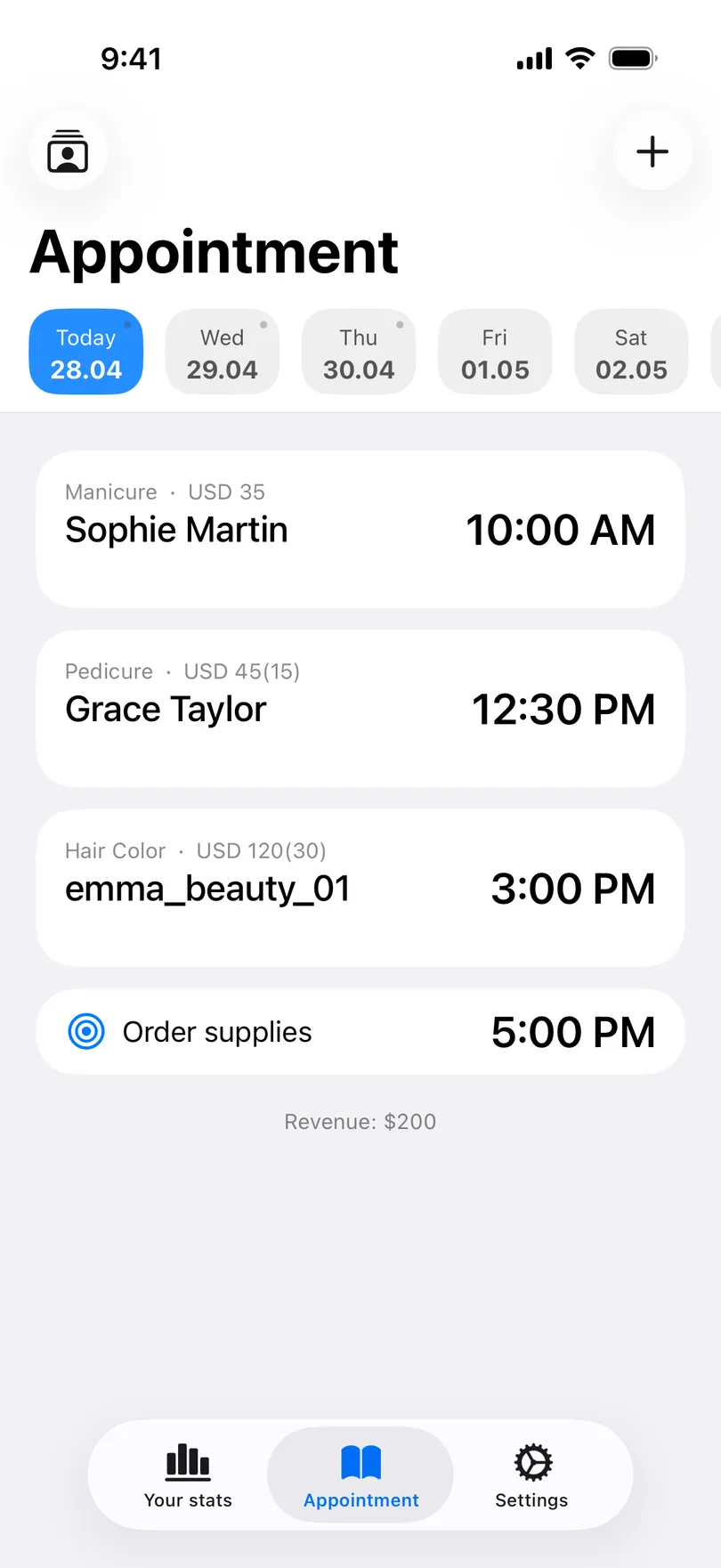
Next visit, you open the card, read the spec, and pick up the right blade — no “remind me, how short did we go last time?” The dog goes home looking exactly like the one the owner loves.
The groomer who remembers the cut, the muzzle for nails, and the dog’s name is the one owners recommend in the dog-park group chat. A client card is a small referral engine.
Reminders That Beat the Matting Cliff
Most lapsed grooming clients didn’t leave you. They let the groom slide, the coat matted, the next visit got expensive and stressful — and they quietly stretched the cycle further. The fix is making sure the window never closes by accident.
In the My Clients app, every booking can fire a push reminder to you — set anywhere from 30 minutes to a day ahead:
- You send a day-before nudge — a quick “Bella’s booked for tomorrow at 10” turns the owner’s “oh no, I forgot” into a confirmed visit
- Cancellations surface earlier — an evening reschedule gives you a full day to fill a 2-hour slot instead of an empty morning
- The cycle stays tight — 6 weeks stays 6 weeks, instead of slipping toward a matted shave-down
- Rebooking becomes the default — book the next groom while the owner’s at the door, and the reminder does the remembering for both of you
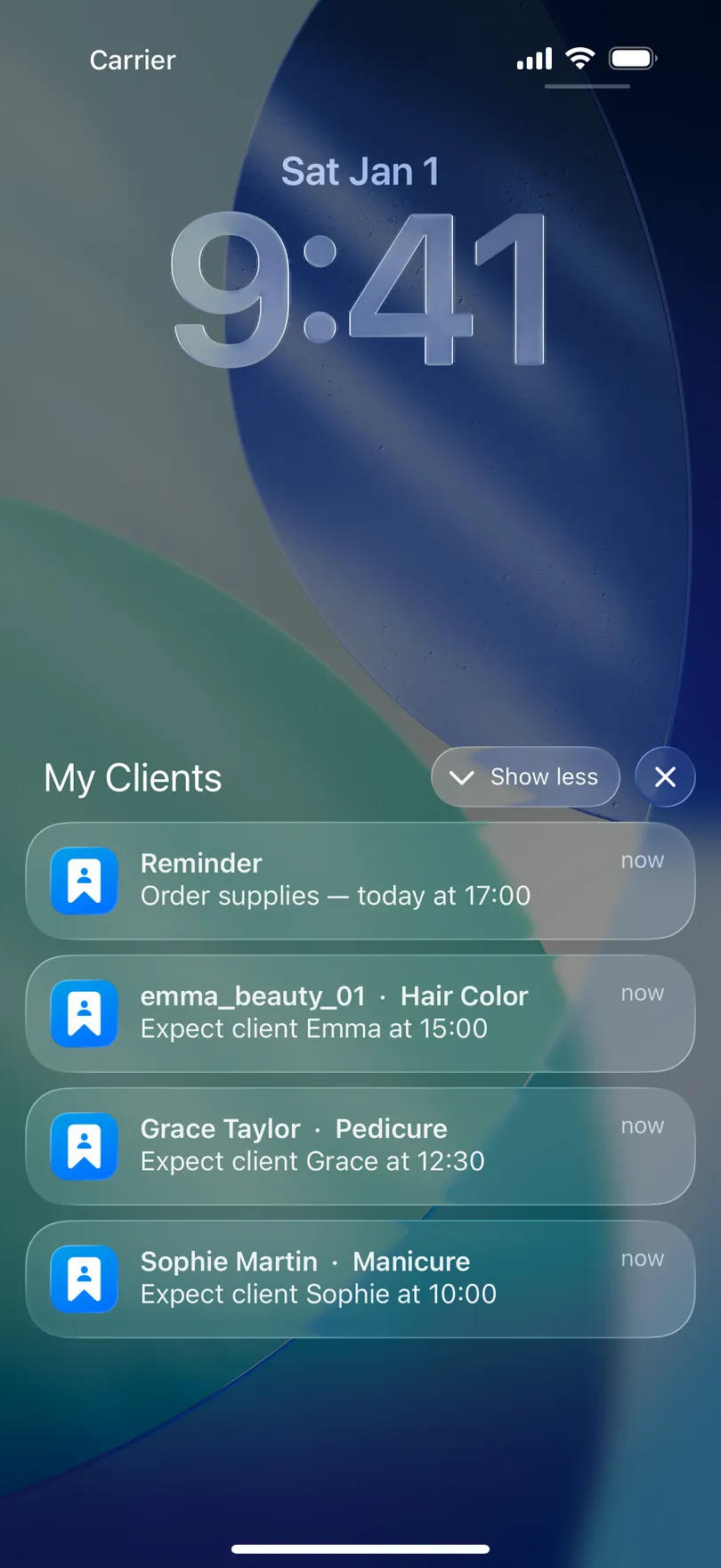
And for the ones who already drifted: visit history makes them visible. Any dog whose last groom is past the cycle is one warm message away — “Bella’s due — let’s get her in this week before the coat mats and it turns into a shave-down” works because it saves the owner money and the dog a rough morning.
Know Your Real Income — Grooms, Add-ons, and Supplies
Grooming has a money pattern most groomers feel but never see: the quick services pay better per hour than the headline one.
A $75 full groom takes 2 hours — that’s about $37 an hour. A $25 nail-and-tidy takes 20 minutes — $75 an hour, on a dog that’s already on your books. Keeping dogs on a tight cycle and adding quick services between full grooms isn’t a soft goal; per hour, it’s your best-paying work.
You only see this when you track it:
- Income by month — every groom, tidy, nail trim, and add-on logged in five seconds at checkout
- Expenses — shampoo, blades (which dull whether you sharpen or replace them), tools, and the rent or van fuel
- Average ticket and working days — the early-warning signals for undercharging and overbooking
- Net profit — the number that actually lands in your pocket
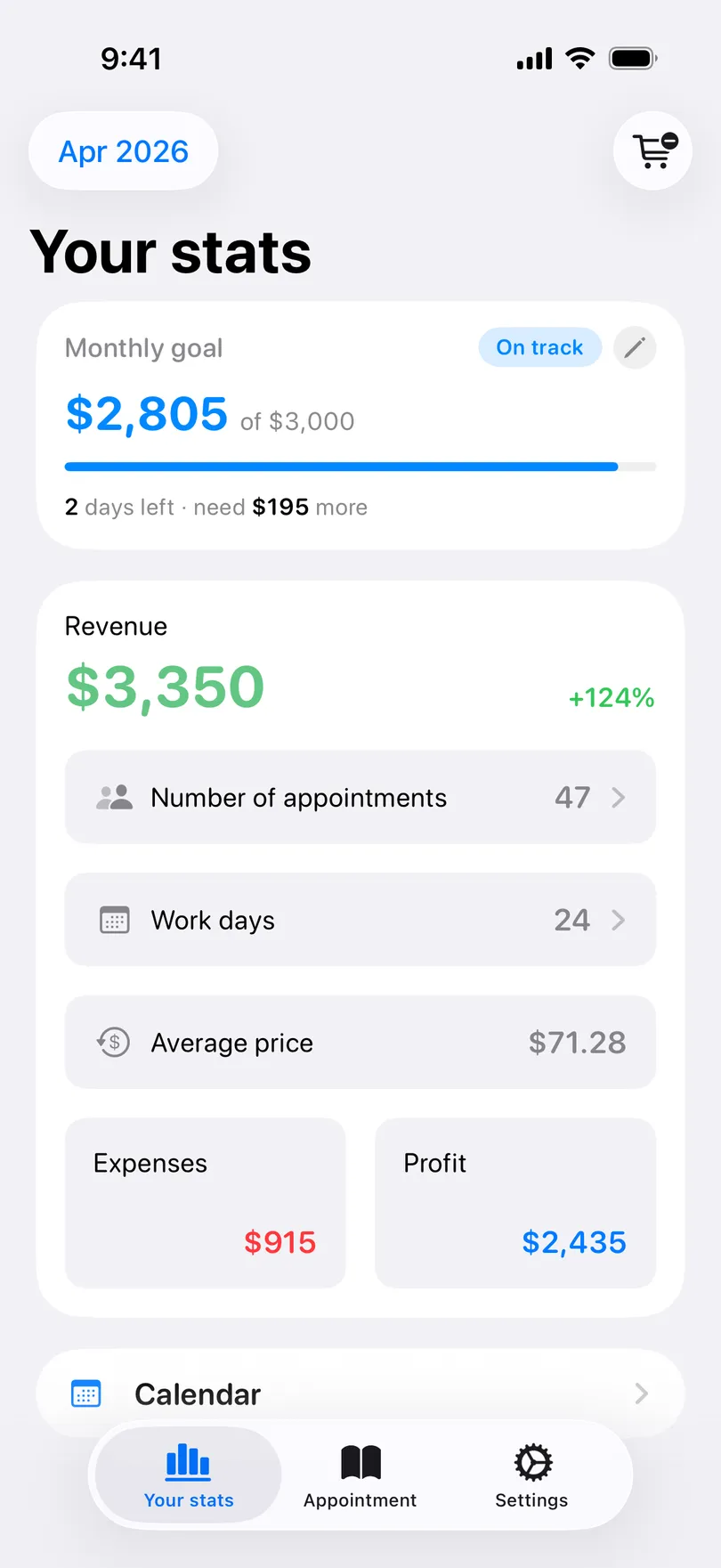
A groomer who “makes around $4,000” and discovers it’s actually $4,450 — with $350 of it going to shampoo and blades — has just found real numbers to set prices with, instead of charging what the place down the road charges.
Before and After: Dana’s Three Months
Before — texts, memory, and a wall calendar:
- 70 dogs on rotation, 6–8 quietly stretching their cycle every month
- 3–4 no-shows a month, most of them long full-groom slots
- Cut specs from memory — a “too short” groom, a nail trim that ended in a nipped thumb
- Bella-style disappearances discovered months late, or never
- Income guess: “around $4,000” — supplies never counted
After — three months with a client app:
- All 70 dogs have cards: breed, cut spec, handling notes, health flags, full history
- You get a day-before reminder on every booking; the next groom is booked before the owner’s out the door
- She scanned for dogs past the cycle, messaged 18 — 10 came back, including Bella
- Every visit and add-on logged at checkout; shampoo and blades entered as expenses
The results
- No-shows dropped from 3–4 a month to 1, saving roughly $220 in dead slots
- Win-back messages brought $540 in one month — and put 10 dogs back on cycle before they matted
- Real income revealed: $4,450, not $4,000 — and the supplies bill finally visible
- Saw nail trims and tidies out-earn full grooms per hour, and started booking them between grooms on purpose
“I thought I was bad with names. I was bad with visibility. The moment I could see which dogs were overdue, getting them back took one text.” — Dana
Your First Week with a System
No data import, no account, no tutorial:
- Download the app — free, no sign-up
- Add your 20 most regular dogs — owner, phone, breed, and the cut spec while it’s fresh
- Book the next two weeks and turn on push reminders
- Log every visit at checkout — five seconds while the owner clips on the leash
- Rebook each dog before the owner leaves — the reminder will do the rest
By your next case of shampoo, you’ll know exactly which dogs are due, which are drifting, and what you really earn.
Your hands do the grooming. Let the app guard the clock. Try My Clients — free, no sign-up, works offline, and your client list never leaves your phone.
You might also find useful
Start organizing your clients today